If there’s one question brands and businesses are asking in 2026 it’s: why it’s suddenly so hard to increase account growth on Instagram?
Those with larger accounts in the 50-100k follower region are reporting that even when content goes “viral”, racking up millions of views (Instagram’s master metric) this doesn’t actually translate into thousands of “follows”.
Let’s take a look at why this is happening, and what you need to think about instead.
Reasons why people don’t “follow” accounts on Instagram any more
1. Algorithms are now organised around an “unconnected” follower model
Social media feeds are increasingly being organised around a “No follower” algorithm model. This is where content that’s seen is driven by interest and topic buckets, rather than by degree of connection.
Past algorithms prioritised content from those you were connected to – on account of your choosing to “follow” their content. When a user saw a piece of content, or an account they liked, they could “follow” it and see more of the same in-feed.
Now that the social media platforms are orientating feeds around content you may be interested in regardless of who created it, the entire reason behind someone following an account has become obsolete.
TikTok has indeed always been organised around this model. The For You Page (FYP) which works as the Feed is designed to deliver an endless stream of curated content – by those you don’t know. In fact, those you do follow are organised into a separate feed completely – and you have to click to get there.
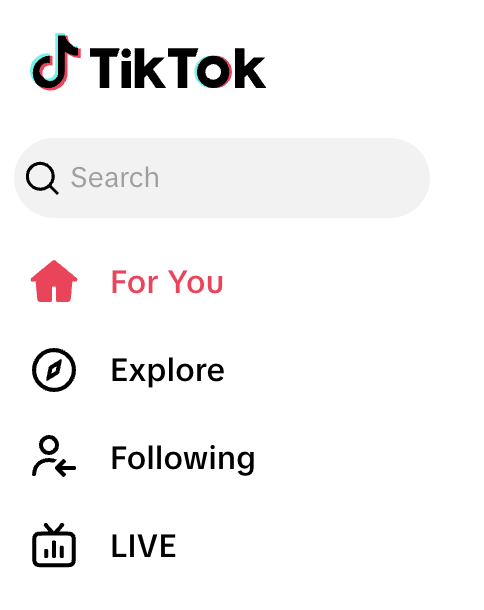
This has meant that on TikTok, the performance of individual videos is often more rewarding than having lots of followers.
And Instagram has recently followed suit.
In 2025, as part of its filing for an antitrust case with the Federal Trade Commission, Meta claimed that less than 7% of time spent on Instagram now involves viewing content from those you actually know:
“Today, only a fraction of time spent on Meta’s services – 7% on Instagram, 17% on Facebook – involves consuming content from online “friends” (“friend sharing”). A majority of time spent on both apps is watching videos, increasingly short-form videos that are “unconnected” – i.e., not from a friend or followed account – and recommended by AI-powered algorithms.”
In fact, even LinkedIn’s senior AI person, reported in March 2026, that LinkedIn has been “rolling out a new advanced ranking system, powered by LLMs and GPUs” and that this changes what we see in-feed, moving from a predominantly “connected” follower model, to an “unconnected” model where most of the content you see isn’t from people you know.
They claim this means seeing more personalised content “whether it comes from your immediate network or professionals you’ve never connected with before.”
2. Users aren’t incentivised to follow accounts they like
Where channels go, users follow and this algorithm development means that users are rarely incentivised to “follow” accounts any more.
In Instagram the Feed seamlessly blends content from those you follow, those you don’t, and sponsored content and often, it is difficult for users to tell where one ends and the other begins. Posts have small headlines sharing whether they are an “Ad”, or “Suggested for you” from someone you don’t follow, but most of the screen is simply filled with the content itself.
This means users become immersed in the content itself, rather than the account of the person who created it.
In fact, many users report thinking they already do follow an account when it appears in their feed.
3. Brands and creators are focused on creating individual content
Due to the content-powered algorithms, brands and creators are forced into creating more content than ever before, in an effort to stay seen and relevant.
This often means publishing more content, even when it may be at the expense of the overall profile. Whereas before on Instagram we spent time curating our “Grid” and ensuring a consistent aesthetic (which some still do by the way), many of us are on the endless roundabout of just desperately trying to be seen – without ever focusing on our overall, cohesive, presence.
This isn’t helped by the shift earlier this year of Instagram moving to a single “master metric” Views, which is now the predominant metric for business and Creator accounts and focuses on how many Views (from followers vs non-followers) each piece of content achieves. This shifts focus from the audience an account is building to the attention an account has in a moment.
Good for Instagram but is it good for business? Likely not.
What to do when you aren’t achieving growth on Instagram
As brands and businesses we need to rethink what “following” means to us. No longer can we trust that if our content performs, our following will increase. Instead, we need to consider how “awareness” with audiences can be translated into audience growth through other channels or methods. This could include:
- Encouraging users to join your Broadcast Channel to receive updates
- Using Stories when you want to connect directly with “followers”, and Carousels or Reels when you’re trying to reach new ones
- Letting users comment to receive a download
- Encouraging audiences to sign up to a newsletter via email
- Having people join a closed group or community for exclusive updates
How are you reframing what “following” means to your brand or business?
If you enjoyed this post or found it useful we share regular weekly breakdowns on Instagram @gettrendieco – why not give us a follow? 😉